Fable: How One Who Tends Fire Uses a Small Cultural Device
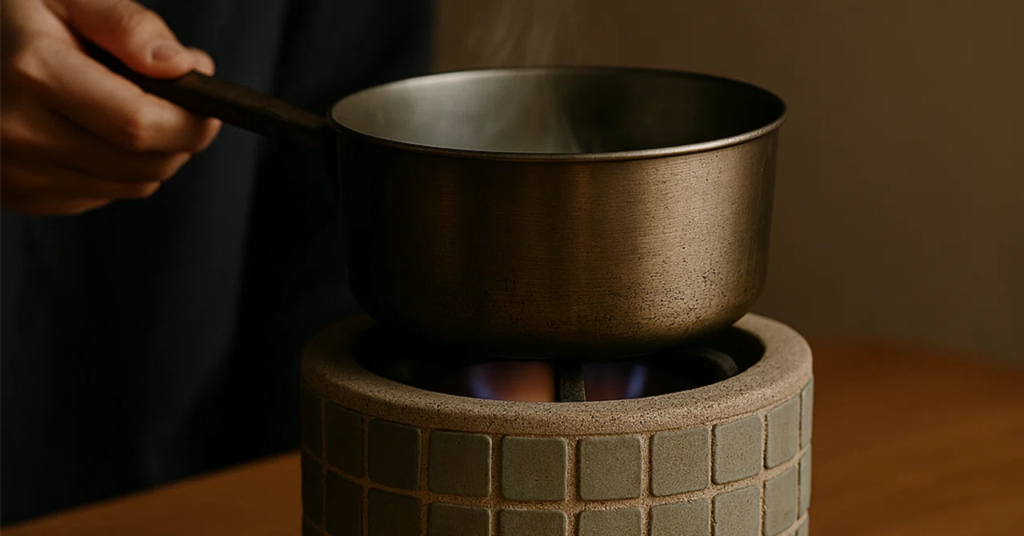
As dusk thinned the evening light, the man gently placed the tabletop hearth on his desk. It was a quiet cultural device, holding the smallest units of fire and earth in the palm of a hand.
First, he set a solid fuel tablet in the center of the hearth. It was like placing a small spark at the center of the day that was now ending.
When he lit it, a round blue flame appeared. It was neither large nor fierce. It simply swayed quietly, as if confirming its own existence.
The man placed a pot softly on top. The coldness of the metal touched the clay, and the hearth slowly began to warm.
Fire does not hurry. Earth does not hurry. Fire warms at the speed of fire, earth at the temperature of earth, and together they begin to warm the world.
Soon, a pleasant aroma rose from the pot— the scent of grains, the sweetness of rice, the steam of a solitary hot pot, the sound of oil in an ajillo, the quiet heating of water for a baby’s milk. All of them were moments shaped by fire and earth.
After about fifteen minutes, the water boiled, the rice danced, and the world slowly shifted. The man simply watched the flame. He knew that tending fire was not about controlling it, but aligning himself with its pace.
As the fuel neared its end, the flame flickered small and yellow— a tiny farewell before finishing its work for the day.
When the fire went out, the tabletop hearth held its gentle residual warmth, softening the air of the room.
The man thought: This hearth is not a tool for cooking. It is a device for reclaiming time.
Lighting the fire, watching the fire, and witnessing its end— this sequence of gestures quietly restores the human heart.
The way to use a tabletop hearth is not to handle fire, but to perform a ritual of returning to one’s own time.