Clay Pipes: Four Thousand Years Beneath Civilization
Civilization is always told from the side that shines. Kings, cities, monuments. But the materials that held its roots together were left in the dark.
Clay pipes were one of them.
When humans began building cities, the first thing they needed was not temples or walls or weapons— but vessels to carry water.
Clay pipes were born as the shadow of civilization.
Across Mesopotamia, Egypt, the Indus, China, Greece, Rome, across deserts, mountains, and forgotten fields, they carried water in silence. No inscription praised them. No poet sang of them. Yet they kept every city alive.
And even when civilizations fell, clay pipes remained underground, still holding their quiet purpose.
One day, a man picked up an old pipe. It smelled of earth, of water long gone, of the warmth of forgotten labor.
He whispered, “This will become a vessel for fire.”
A material made for water found its true breath in flame.
Clay does not fear fire— it remembers it. It shapes the flame, softens it, lets it breathe.
Four thousand years of silence rose gently when the man lit the small hearth. The blue flame trembled, as if the material itself finally exhaled.
He lifted the lid of a small clay pot, looked at the rice shining with steam, and murmured over a sip of fresh coffee:
“This flame waited underground for four thousand years to illuminate the quiet part of someone’s life.”
Clay pipes, at last, saw the light as vessels of fire.
To Ebe. Toward the quiet.
Afterword
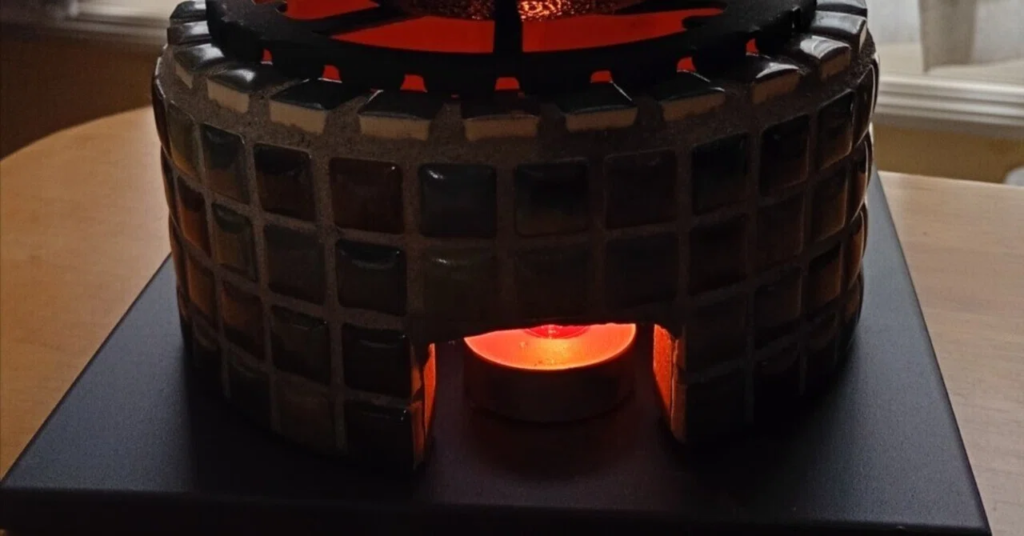
The Hearth Lamp—the little clay stove—is not merely a tool for fire.
It is a vessel that brings quiet, the culture of flame, and four thousand years of material history into the rhythm of your everyday life.
And in that quiet, it gently acknowledges the parts of your life no one ever saw— the effort that went unnoticed, the feelings that never found words.
It does not praise you. It simply says, “I see the quiet you’ve carried.”