Prologue — Fire Was Born in Silence and Empty Space
Japan’s fire culture was never about the size of the flame, the intensity of heat, or dramatic display.
It was shaped by silence and empty space.
Fire was the center of life, a place of prayer, a symbol of family, and a presence that calmed the heart.
At the center of all this stood the hearth.
Chapter 1 — Jōmon Hearths: The Origin of Fire and Shadow
Every Jōmon dwelling site contains a hearth.
It was not merely for cooking. It was a place to gather, to speak, to pray, and to gaze into the shadows.
Fire was the center of life, and the center of the spirit.
The quiet flame of the minikamado breathes with the same spirit.
Chapter 2 — Yayoi to Kofun: The Birth of the Hearth’s Prototype
In the Yayoi period, simple fired‑clay hearths appeared.
To handle fire, people fired earth. This was the beginning of Japan’s fire culture— the first union of earth and flame.
The ceramic tube of the minikamado inherits this primordial structure.
Chapter 3 — Heian to Medieval: The Hearth Becomes the Center of the Home
In the Heian period, the hearth stood at the center of the home.
It was the place where Aragami, the fire deity, was enshrined. Fire possessed personality, protected the family, and ordered daily life.
The quiet flame of the minikamado revives this “personhood of fire” today.
Chapter 4 — Edo: The One‑Gō World and the Maturity of Hearth Culture
In Edo, ordinary people cooked one or two gō of rice in small hearths.
One gō was the unit of life, of family, of the heart.
The minikamado perfectly recreates this world in modern tabletop size.
Not by coincidence— but by cultural inevitability.
Chapter 5 — Meiji to Shōwa: The End and Forgetting of Hearth Culture
After Meiji, metal “hearths” and stoves spread, and true hearth culture vanished.
Metal devices do not nurture fire, do not let it breathe, and strip away its personality.
Fire came to be spoken of in terms of “efficiency” and “heat,” and cultural quietness was lost.
Metal “hearths” belong to this line of cultural rupture.
Chapter 6 — Today: The Forgotten Fire Culture Awakens
One day, a man picked up an old ceramic tube.
It smelled of earth, held the memory of water, and carried the temperature of ancient civilization.
He thought:
“This will become a vessel for fire.”
Ceramic tubes once carried water. But he entrusted them with flame.
A material that had slept in silence underground breathed fire for the first time.
Chapter 7 — Minikamado: The Rebirth of Japan’s True Hearth Lineage
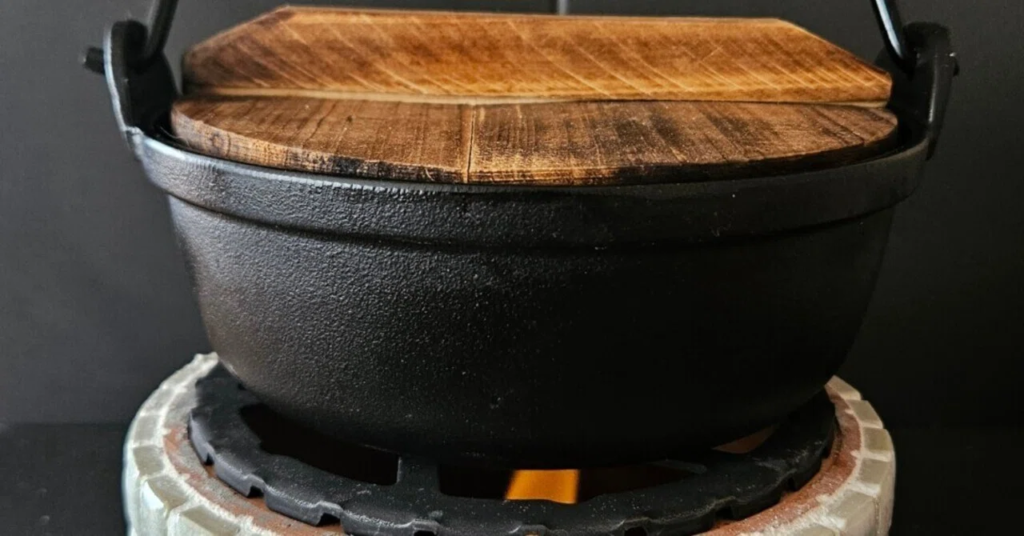
The minikamado brings the true DNA of Japan’s hearth culture directly into modern life.
- Earthen heat storage & far‑infrared warmth (ceramic tube)
- Breathing flame (airflow structure)
- One‑gō world (authentic food culture)
- Quiet flame (aesthetic lineage)
- Personhood of fire (folk‑spiritual continuity)
Chapter 8 — Story: The Night When Hearth Culture Breathes Again on a Modern Table
The man lit the minikamado.
The blue flame of solid fuel quietly swayed inside the ceramic tube.
Its rhythm matched the Jōmon hearth, held the stillness of the Heian hearth, and recalled the one‑gō world of Edo.
The flame did not rage, did not make noise— it simply deepened the air.
He thought:
“This is hearth fire.”
Earth nurtures fire, fire illuminates earth, and their quietness steadies the heart.
In that moment, hearth culture breathed again on a modern table.
Epilogue — True Hearth Fire Illuminates the Quiet Parts of Life
The minikamado is not a tool. It is the sole cultural device that inherits the true DNA of Japan’s ancient hearth.
And fire whispers:
“I exist to illuminate the quiet parts of your life.”